



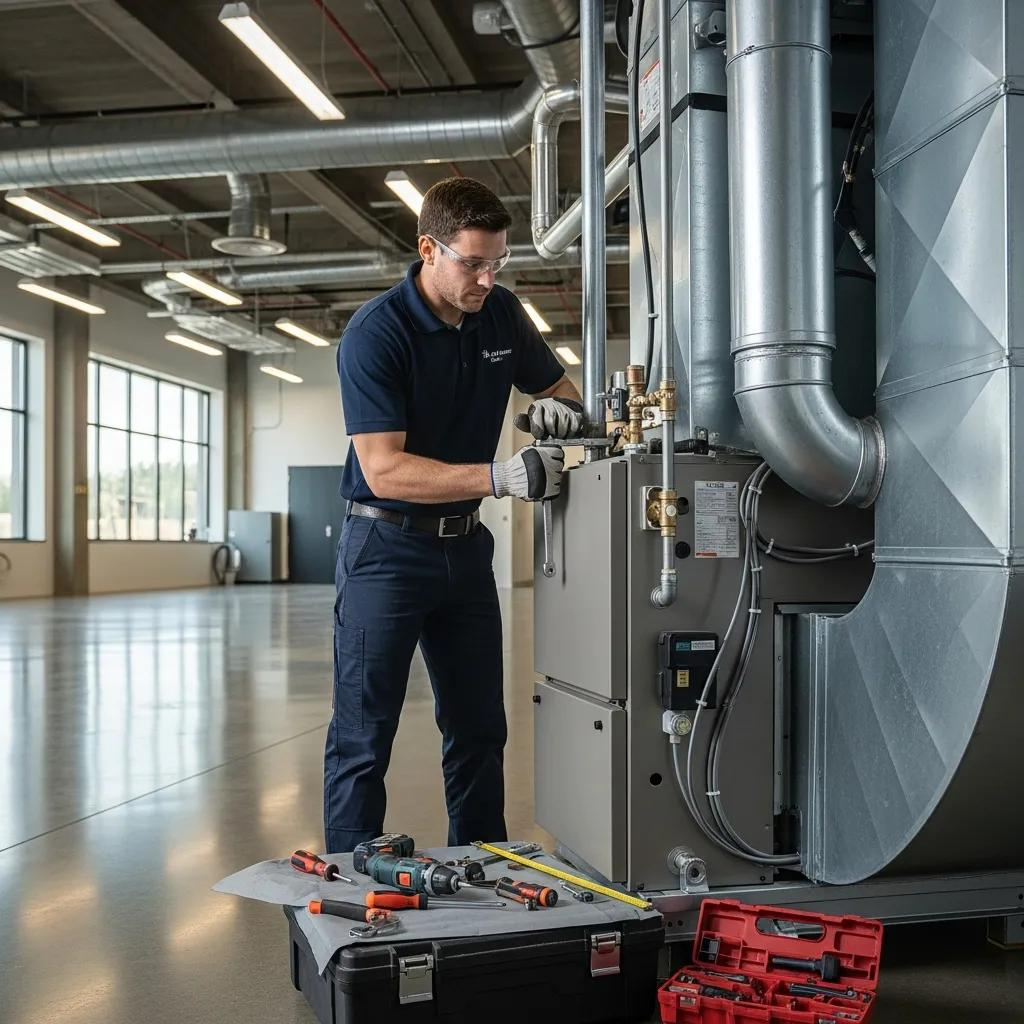
This is some text inside of a div block.

Comprehensive Guide to Commercial Furnace Replacement
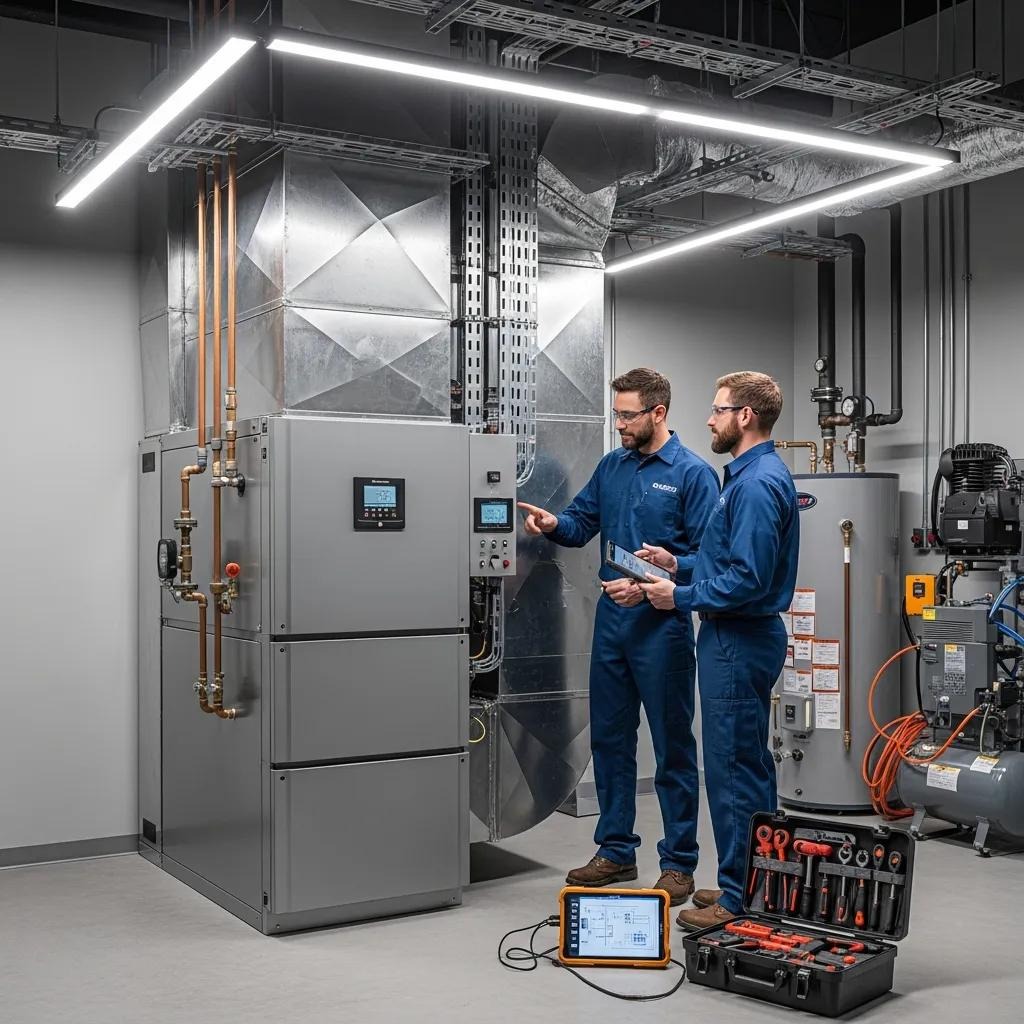
Replacing a commercial furnace is a significant capital choice that affects energy costs, occupant comfort, code compliance and uptime. This guide breaks down what furnace replacement looks like, why building owners and facility managers plan for it, and how a planned approach cuts downtime and long-term operating expense. You’ll find clear signs a system is nearing end of life, how to pick the right replacement by fuel, size and controls, the step‑by‑step replacement process, and how to budget and finance the work. Practical checklists, comparison tables, and next steps make it easier to move from assessment to installation with fewer surprises. The focus here is commercial systems, installation best practices, efficiency metrics like AFUE, and the cost drivers typical for properties in North Carolina and similar climates.
When Should You Replace Your Commercial Furnace? Key Signs and Indicators
It’s time to consider replacement when repairs no longer restore reliable, efficient operation or when safety and comfort decline. Look for measurable signals: system age, frequent repairs, rising energy use, uneven heating, or safety warnings like combustion odors or suspected CO. Replacing a failing furnace reduces unplanned downtime and often delivers energy savings through higher AFUE and modern controls. Treat recurring faults and persistent comfort complaints as triggers to schedule a full inspection and load calculation.
This quick checklist highlights the top signals that should prompt an inspection:
- System age against expected lifespan: When a furnace nears its typical commercial life expectancy, plan for replacement.
- Frequent breakdowns: Multiple service calls in one season usually mean repairs aren’t cost‑effective.
- Rising energy bills: Higher fuel use for the same load signals efficiency loss.
- Comfort complaints: Persistent uneven heating, cold zones, or unresponsive controls impact occupants.
- Safety concerns: Any odors, unusual noises, or alarm events require immediate evaluation.
Those indicators help set capital priorities and should lead to a professional assessment when several appear together.
If you notice multiple warning signs, contact a qualified HVAC provider for a full diagnostic and life‑cycle analysis. Morris Mechanical Inc. has experience with end‑of‑life systems and can arrange professional assessments and estimate requests by phone at (704) 922-9727.
What Are the Common Signs of Furnace Failure in Businesses?
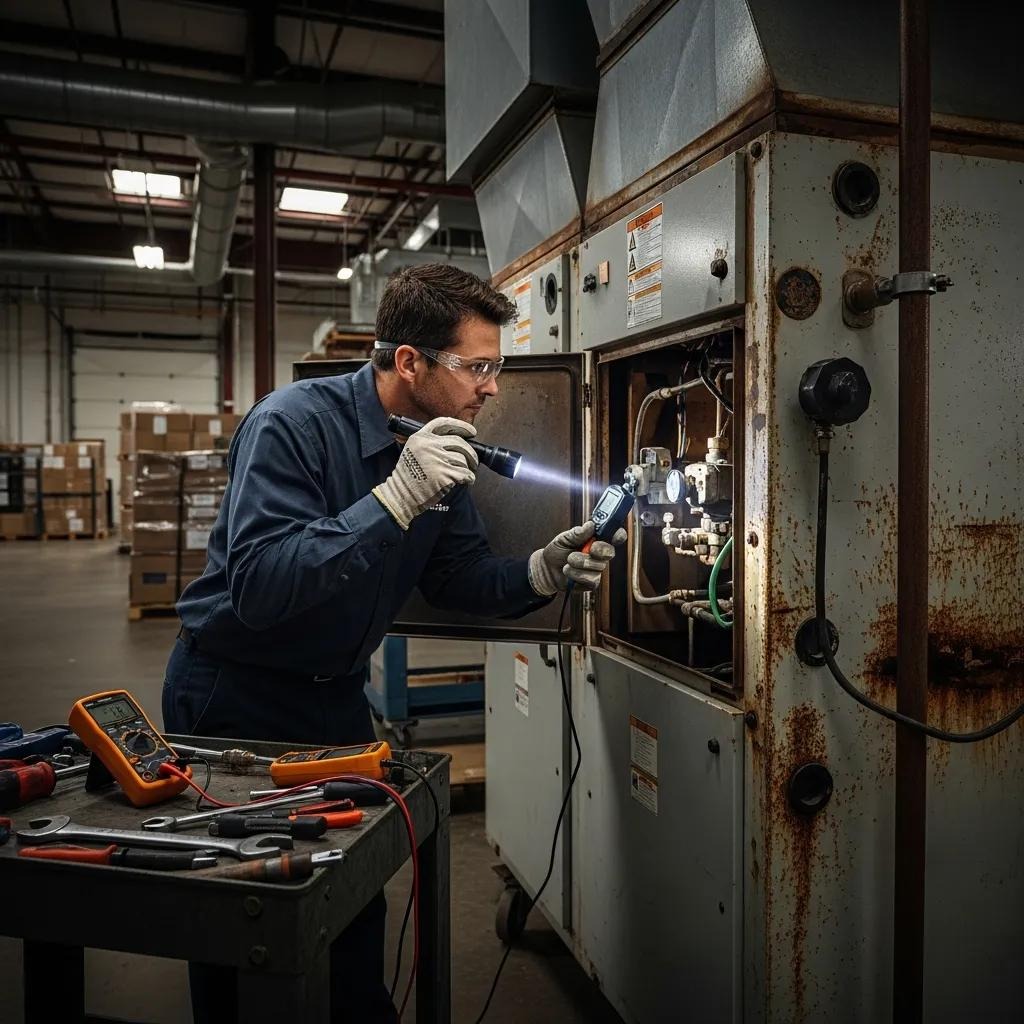
Operational symptoms often point to specific failing components and help prioritize troubleshooting before deciding on replacement. Loud rattling or knocking can indicate bad bearings, loose ductwork, or a worn burner assembly. Short cycling, falling heat output, and uneven zone temperatures suggest heat exchanger wear or control issues. Detectable odors, visible soot, or pilot problems are immediate safety flags — shut down fuel and call a pro. Facility managers should log symptom frequency and service records to compare repair costs against replacement ROI.
Recording symptoms lets you map each issue to likely component failures and define the replacement scope. For example, uneven heating might come from the furnace or from leaky ductwork; a proper assessment will show which fix gives the best return. Take immediate safety steps — power down suspect equipment and isolate affected zones — then schedule a detailed inspection to confirm next steps and any required permits.
How Does Furnace Age Affect Replacement Decisions?
Age is a reliable indicator of remaining useful life but must be viewed with maintenance history and operating context. Commercial furnaces commonly reach the end of cost‑effective life between 15 and 20 years, depending on duty cycles, fuel quality and preventive maintenance. Age alone can justify replacement when efficiency has dropped enough that energy savings and lower maintenance costs pay back the capital expense within an acceptable window. Conversely, a younger unit that was poorly maintained may still fail early, so factor in service records and repair frequency.
Estimating ROI means projecting energy savings from a higher AFUE, reduced repair costs, and avoided downtime. A life‑cycle cost comparison — including capital, installation and annual operating expenses — clarifies whether you should replace now or phase the work. Engage a licensed HVAC professional to run a load calculation and financial model before committing to capital spending. Research supports doing a full financial analysis when evaluating HVAC upgrades.
How to Choose the Right Commercial Furnace for Your Business Needs
Choosing the right commercial furnace means matching fuel type, unit class, sizing and controls to how the building is used. Start with an accurate load calculation to size the BTU output, then pick a unit — commercial gas furnace, electric furnace, packaged rooftop unit or heat‑pump/VRF system — that fits your utilities, ventilation needs and emissions goals. Efficiency (AFUE), compatibility with building automation, and ongoing maintenance expectations are key decision factors. Proper specification reduces lifecycle cost and improves comfort.
Use the table below to compare common fuel and unit choices and align attributes with typical commercial uses.
Common fuel types and typical attributes for commercial applications:
This comparison shows how fuel choice affects efficiency, installation complexity and emissions compliance. Choose equipment that matches your utility infrastructure and long-term goals. Morris Mechanical Inc. can size and install the right commercial system — call (704) 922-9727 for a tailored quote and professional sizing.
What Types of Commercial Furnaces Are Available?
Commercial furnaces fall into a few families: dedicated commercial gas furnaces for high‑BTU needs, electric furnaces where combustion isn’t practical, packaged rooftop units that combine heating and ventilation, and increasingly heat‑pump or VRF systems for electrification. Each option has trade‑offs: gas delivers high output with lower fuel cost where available; electric simplifies installation but can cost more to operate; packaged units save indoor space but may add rooftop rigging. Heat pumps and VRF systems can boost efficiency and integrate well with demand‑controlled ventilation.
Your choice depends on the building envelope, fuel access, rooftop structural capacity and desired integration with building automation. Also consider utility trends and incentives that favor higher efficiency and lower emissions.
How Do Efficiency Ratings Impact Furnace Selection?
AFUE measures the share of fuel converted to usable heat; higher AFUE means lower fuel use for the same load. Upgrading from mid‑range to high‑efficiency models can produce sizable annual savings, with payback depending on run hours and fuel prices. Efficiency also affects rebates and code or sustainability requirements. Controls that allow modulation, zoning and demand‑controlled ventilation multiply efficiency gains by reducing wasted heating.
Run simple comparative calculations when specifying equipment to estimate energy savings from higher AFUE units, and include expected maintenance and downtime savings in the ROI. Facilities focused on long‑term savings should prioritize efficiency, control capability and maintainability.
What Is the Process for Commercial Furnace Replacement? Step-by-Step Overview
A structured replacement process ensures code compliance, minimizes downtime and verifies system performance after installation. Core phases include site assessment and load calculation, permitting and scheduling, removal and disposal of the old unit, installation and ductwork/control integration, and final commissioning with documentation. Each phase delivers clear outputs: equipment lists, permits and inspection records, safe demolition and disposal manifests, a code‑compliant installation, and a commissioning report that verifies performance. Following this sequence reduces risk and keeps stakeholders aligned on timeline and responsibilities.
Careful planning and adherence to best practices are essential for avoiding budget overruns and schedule delays on complex furnace upgrades.
Key steps for a standard replacement are:
- Site assessment and load calculation: Confirm capacity needs and site constraints.
- Permitting and scheduling: Secure approvals and plan necessary outages.
- Demolition and disposal: Remove the old unit safely and document disposal.
- Installation and integration: Install the new unit and update ductwork and controls.
- Commissioning and handover: Test performance, finalize controls, and deliver documentation.
This stepwise plan aligns with project milestones and gives contractors and facility teams a clear checklist. Morris Mechanical Inc. performs site assessments, supports permitting, handles removal and disposal, and completes commissioning and handover documentation; schedule a service consultation
How Is the Site Assessed and Planning Conducted?
A site assessment gathers the measurements and utility details that drive equipment selection and installation planning. The survey covers thermal load calculations, structural and clearance checks for rooftop or mechanical room installs, gas service capacity and piping, electrical service and disconnects, and existing ductwork condition. These findings reveal whether additional scope — like duct replacement, roof reinforcement or utility upgrades — is needed and shape permitting requirements. A thorough assessment produces a clear statement of work and a schedule that minimizes disruption.
Assessment results also identify code compliance items, required inspections, and opportunities for phased implementation. Accurate assessment reduces change orders and sets realistic budget expectations for equipment and labor.
Assigning responsibilities clarifies handoffs and ensures accountability at each stage of the replacement.
What Are the Installation Steps and Compliance Requirements?
Installation follows safety and code requirements and typically includes demolition, mounting or rooftop placement, gas and electrical connections, ductwork modifications, control integration and multi‑point testing. Compliance checkpoints cover local mechanical and electrical inspections, combustion air and venting clearances, any emissions/NOx limits, and proper refrigerant handling for heat‑pump alternatives. Final commissioning must document performance against the load calculation and show safe, efficient operation under normal and peak conditions.
A commissioning checklist should verify airflow, thermostat calibration, burner performance, safety interlocks and control sequences. Complete documentation makes future maintenance simpler and supports warranty claims.
What Are the Costs and Financing Options for Commercial Furnace Replacement?
Knowing cost drivers and financing options helps facility teams plan capital budgets and evaluate ROI. Major cost buckets are equipment, labor, permits/inspections, ductwork or structural modifications, and disposal of the existing system. Cost varies with system size, rooftop rigging needs, site access, and the scope of control or duct upgrades. Financing and incentive programs — vendor financing, utility rebates, and maintenance plans — can smooth cash flow and accelerate efficiency upgrades.
How Are Replacement Costs Broken Down?
A replacement budget typically includes equipment purchase, installation labor, permits and inspections, ductwork or structural work, and disposal/abatement for the old unit. Larger jobs may add crane or hoisting fees, structural reinforcement and extended outage costs; like‑for‑like swaps usually reduce labor. Budgeting contingency and including lifecycle operating cost estimates helps avoid surprises and supports procurement decisions.
Looking into specific cost components, such as refractory materials, can reveal hidden maintenance and efficiency impacts.
This breakdown highlights where budgets go and where phased approaches or scope controls can lower costs.
What Financing and Incentive Programs Are Available?
Financing options include equipment leasing, contractor/vendor financing, local utility rebates, manufacturer incentives, and state or federal programs that support energy efficiency. Utilities often offer rebates tied to AFUE or control upgrades; vendor financing can spread payments to match cash flow. Many contractors also bundle maintenance plans with reduced up‑front costs. For current promotions, financing options, or maintenance plans, contact Morris Mechanical Inc. to discuss available offers and get a financing overview.
Conclusion
Replacing a commercial furnace is an important investment that improves energy efficiency, occupant comfort and safety compliance. By spotting failure signs early and choosing the right unit, facility managers can cut operating costs and reduce downtime. Working with experienced professionals like Morris Mechanical Inc. streamlines the process and delivers solutions tailored to your facility. Contact us today to explore options and make the transition to a more efficient heating system as smooth as possible.
Other Blogs


More Blogs
Explore the fascinating world of blogging, where creativity meets information. Discover how engaging content can captivate audiences and drive meaningful conversations.
.jpeg)
